Wisdom teeth do not need to be removed simply because they exist. Some erupt into a healthy, functional position and can be cleaned. Others remain impacted, repeatedly inflame the gums, damage a neighboring tooth, or develop decay or cystic change.
Dental Wellness Arts bases the recommendation on symptoms, examination, imaging, age, anatomy, and the risk of future problems.
Healthy, functional, cleansable wisdom teeth can often be monitored. Removal is more likely when there is pain, recurrent infection, decay, periodontal damage, resorption, a pathologic finding, or insufficient space for health and hygiene.

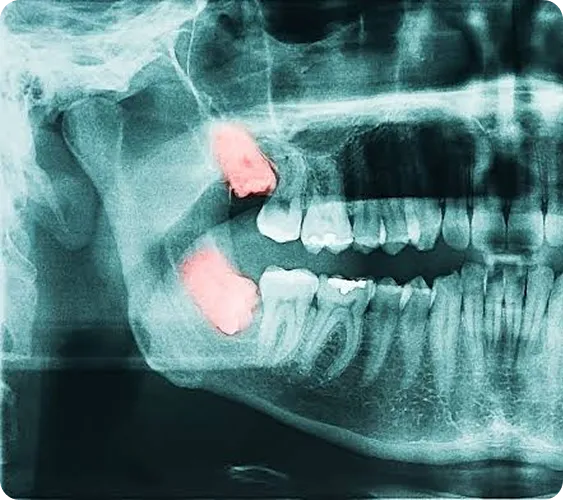
A panoramic image usually shows tooth position, root development, bone, neighboring teeth, and the approximate relationship to the lower-jaw nerve or upper sinus. A 3D CBCT scan may be recommended when added detail will change the surgical plan or consent discussion.

Monitoring should be active: periodic examination, appropriate imaging, and clear triggers for change. Removal can involve simple or surgical extraction, depending on eruption and root position.
Risks can include dry socket, infection, bleeding, swelling, limited opening, sinus communication, and temporary or permanent nerve changes. Coronectomy or specialist referral may be considered when lower roots are very close to a nerve.

Review symptoms, hygiene access, gum health, and diagnostic imaging.
Discuss monitoring, removal, timing, referral, and the risks of each.
Complete surgery and aftercare, or keep a documented monitoring schedule.
Success may mean comfortable healing after necessary removal or years of healthy monitoring without unnecessary surgery. The right decision manages present disease and future risk while respecting the anatomy around each tooth.
Dr. Boyajian and the Dental Wellness Arts team treat wisdom teeth as a case-by-case decision, not a routine milestone. We use the imaging needed to understand the anatomy, choose conservative instruments, refer early when appropriate, and explain the options directly so you can decide with real information.


No. Teeth that are healthy, functional, and maintainable can often stay.
It is inflammation or infection around a partly erupted tooth, often causing pain, swelling, bad taste, or difficulty opening.
When the nerve, sinus, root shape, or other anatomy is unclear and the added detail could change the procedure.
Follow aftercare, avoid smoking and vaping, do not disturb the clot, and contact us if pain worsens after initial improvement.
We discuss the risk, the value of CBCT, possible coronectomy, or referral to an oral surgeon.
Bring any recent panoramic or 3D imaging. We will explain whether removal, monitoring, or referral makes the most sense and why.

Advanced Regenerative Dentistry
Westchester's trusted holistic dental practice. Caring for smiles and whole-body health since 2005.


Monday
7am – 3:30pm
Tuesday
7am – 3:30pm
Wednesday
7am – 3:30pm
Thursday
7am – 3:30pm
Friday – Sun
Closed
©2026 All Rights Reserved. Design & Development by Jamie Danae | Sitemap | Privacy Policy | The information available on this website is provided for informational purposes only. This information is not intended to replace a medical consultation where a physician’s judgment may advise you about specific disorders, conditions, and/or treatment options. We hope the information will be useful for you to become more educated about your health care decisions. If you are vision-impaired or have some other impairment covered by the Americans with Disabilities Act or a similar law, and you wish to discuss potential accommodations related to using this website, please contact us at 310-670-6944.