Practitioner Partnership Guide
Every referred patient generates a written report back to you — clear findings, a proposed plan, and a return to your care when the dental work is done.


A referral partnership built on written reports, not handoffs.
Our Purpose
We partner with providers to identify and manage oral
conditions that may contribute to systemic inflammation,
chronic pain, and sleep-disordered breathing. We screen, we
document, and we refer — integrating dental care into each
patient's broader treatment plan through evidence-based,
collaborative care.
Clinical Scope
The oral cavity is one of the few sites where a clinician can directly observe what is going on inside the body. Findings there frequently overlap with conditions you manage — diabetes, cardiovascular disease, inflammation, autoimmune conditions, and sleep-disordered breathing.

Probing depths, bleeding on probing, attachment and bone loss.
Salivary flow, medication-associated dry mouth.
Mallampati, tonsillar grade,
STOP-Bang; CBCT airway volume.
Abscess, chronic apical pathology, mucosal lesions.
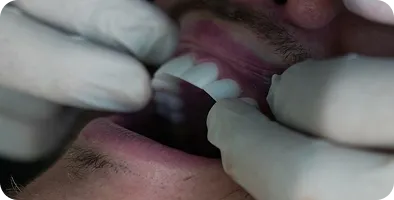
Visual and tactile exam of soft tissue and lymph nodes.
Salivary flow, medication-associated dry mouth.
Wear facets, fremitus, fracture patterns.
Cariogenic bacteria, oral acidity, buffer capacity, inflammatory markers.
Our Practice
At Dental Wellness Arts, we believe oral health is an essential part of whole-body wellness. Led by Dr. Boyajian, our practice is committed to providing comprehensive, evidence-based care using minimally invasive, biomimetic principles and biocompatible materials
whenever possible.
We are a mercury-free and fluoride-free practice that recognizes the potential impact certain materials may have on overall health, and we strive to support each patient's wellness through personalized treatment.
From routine preventive care to complex implant rehabilitation, we incorporate ozone therapy throughout our practice and focus on reducing oral inflammation, preserving natural tooth structure, and partnering with healthcare providers to support the health of the whole person.
Guiding Principles

Restorations that mimic the mechanics of natural tooth structure.
Preserve sound tooth structure; remove only what disease requires.
Material selection made with the whole patient in mind.
No fluoride used in preventive or restorative care.
No amalgam placed. Removal performed under the SMART protocol (IAOMT).
Incorporated across preventive, restorative, and surgical care.
In-House Capability

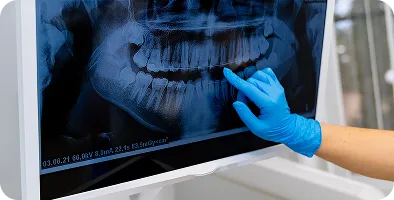
Low-dose 3D imaging of osseous structures and airway volume.
In-office airway testing; referral for a sleep study when indicated, physician-interpreted.
Six-point probing, mobility, furcation, recession.
Reduced-dose intraoral and panoramic imaging.
Oral cancer screening
Performed at every comprehensive examination.

Referral Criteria

Patients with general dental concerns
Chronic facial pain, headache, or jaw pain of unclear origin
Patients with root canals or mercury fillings
When you suspect a patient might have a cavitation
Persistent oral lesion of more than two weeks duration
Xerostomia, halitosis, bleeding gums, or tooth mobility
Periodontal evaluation during prenatal care
Type 2 diabetes with poor glycemic control and periodontal disease
Patients starting bisphosphonates or anti-resorptive therapy
Patients in need of preoperative clearance
Workflow
Complete the form on page 6. Email it to us, or hand it to the patient.
We reach out in a timely manner. Scheduling is handled on our end.
Comprehensive exam, imaging as indicated, periodontal charting.
A written summary of findings and proposed treatment, sent to you directly.
Treatment sequencing coordinated around your clinical priorities.
Interval status updates for patients under active medical management.

Every referred patient generates a written report back to the referring provider. We do not redirect referred patients to unrelated services, and we return them to your care with a clear summary of what was found, what was treated, and what remains outstanding.

Advanced Regenerative Dentistry
Westchester's trusted holistic dental practice. Caring for smiles and whole-body health since 2005.


Monday
7am – 3:30pm
Tuesday
7am – 3:30pm
Wednesday
7am – 3:30pm
Thursday
7am – 3:30pm
Friday – Sun
Closed
©2026 All Rights Reserved. Design & Development by Jamie Danae | Sitemap | Privacy Policy | The information available on this website is provided for informational purposes only. This information is not intended to replace a medical consultation where a physician’s judgment may advise you about specific disorders, conditions, and/or treatment options. We hope the information will be useful for you to become more educated about your health care decisions. If you are vision-impaired or have some other impairment covered by the Americans with Disabilities Act or a similar law, and you wish to discuss potential accommodations related to using this website, please contact us at 310-670-6944.