Dental ozone and nano-silver are antimicrobial therapies that may be used to support selected dental procedures. Ozone may be delivered as a gas, water, or oil. Nano-silver refers to silver particles used in specific products or materials. They are different therapies, and neither replaces standard treatment for decay, infection, or gum disease.
The Dental Wellness Arts team considers these options only after diagnosing the problem and identifying the established treatment needed first. The exact product, concentration, delivery method, expected benefit, and safety information all matter.
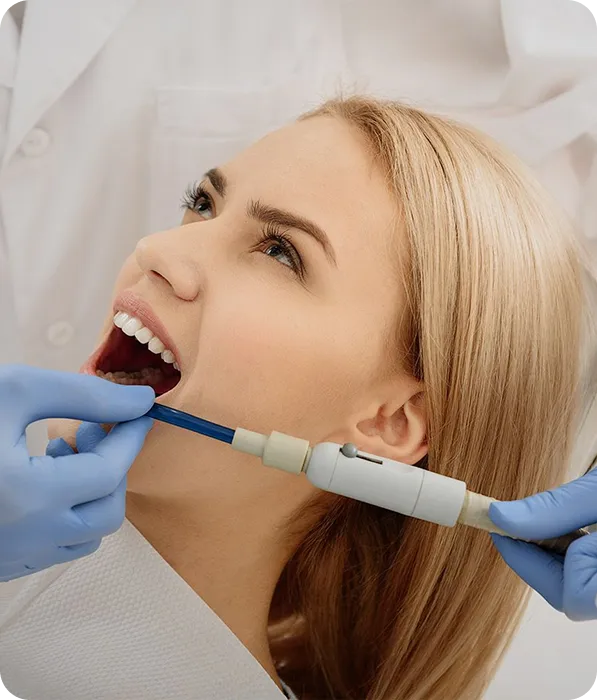
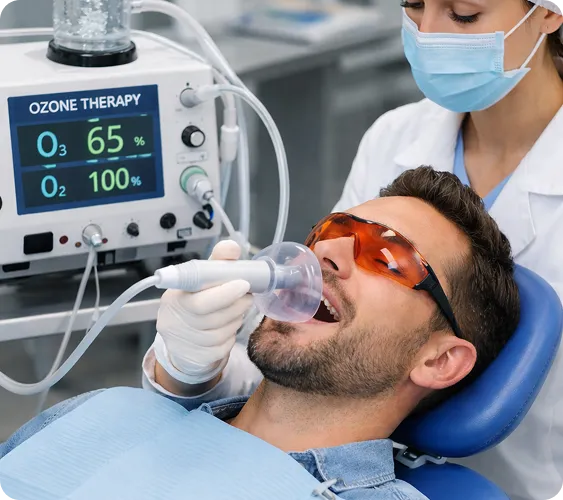
Dental ozone may be used as a gas, water, or oil during selected procedures. Nano-silver products vary widely in formulation and safety. Any recommendation must identify the exact therapy, product, purpose, dose, and route of exposure.

Ozone has antimicrobial activity and may be considered as additional support during selected periodontal, restorative, surgical, or endodontic procedures. Clinical evidence is mixed and protocol-dependent. Ozone does not replace removal of decay, drainage of an infection, root-canal treatment, surgery, or other necessary care.

Nano-silver is not one uniform dental treatment. Particle size, coating, concentration, tissue contact, duration, and ingestion or inhalation risk can change both performance and safety. Long-term oral exposure and broad systemic claims require particular caution.
Because products and protocols vary, the Dental Wellness Arts team will explain the exact therapy being considered, its intended role, possible risks, and established alternatives before you decide.

Determine which established treatment is needed first.
Identify the exact product, protocol, expected benefit, and uncertainties.
Measure healing or disease control and change course if the supportive therapy is not helping.
Success means the added therapy provides a reasonable benefit without delaying definitive care or creating misleading expectations. When evidence or product details are uncertain, the responsible choice is to rely on established care and avoid overstating the benefit.
Dr. Boyajian has published research on the antimicrobial properties of ozone and nano-silver. He and the Dental Wellness Arts team apply both carefully, weighing material exposure and tissue preservation within clear clinical boundaries. We recommend a supportive therapy only when it has a defined role in a specific procedure, not because a broad wellness claim sounds appealing.


Very early non-cavitated lesions may sometimes be managed conservatively, but ozone cannot rebuild a tooth once structure has been lost.
No. Periodontal treatment still depends on diagnosis, thorough cleaning, risk control, and maintenance.
The word natural does not establish safety or effectiveness. The exact formulation and exposure must be evaluated.
Regulatory status is product- and use-specific. The exact device or product must be verified.
Not on your own. The need for medication, drainage, or urgent treatment depends on the infection and your medical risk.
Ask the Dental Wellness Arts team whether ozone or nano-silver has a defined role in your treatment plan. The team will explain the product, intended benefit, limitations, and established alternatives before you decide.

Advanced Regenerative Dentistry
Westchester's trusted holistic dental practice. Caring for smiles and whole-body health since 2005.


Monday
7am – 3:30pm
Tuesday
7am – 3:30pm
Wednesday
7am – 3:30pm
Thursday
7am – 3:30pm
Friday – Sun
Closed
©2026 All Rights Reserved. Design & Development by Jamie Danae | Sitemap | Privacy Policy | The information available on this website is provided for informational purposes only. This information is not intended to replace a medical consultation where a physician’s judgment may advise you about specific disorders, conditions, and/or treatment options. We hope the information will be useful for you to become more educated about your health care decisions. If you are vision-impaired or have some other impairment covered by the Americans with Disabilities Act or a similar law, and you wish to discuss potential accommodations related to using this website, please contact us at 310-670-6944.