Dental anxiety can make even a cleaning feel overwhelming. Delaying care can allow a small concern to become more complex and make the next visit feel even harder.
Dental Wellness Arts offers sedation dentistry for adults who want to feel calmer and less focused on the activity around them, from a routine cleaning to longer restorative care or complex dental surgery.
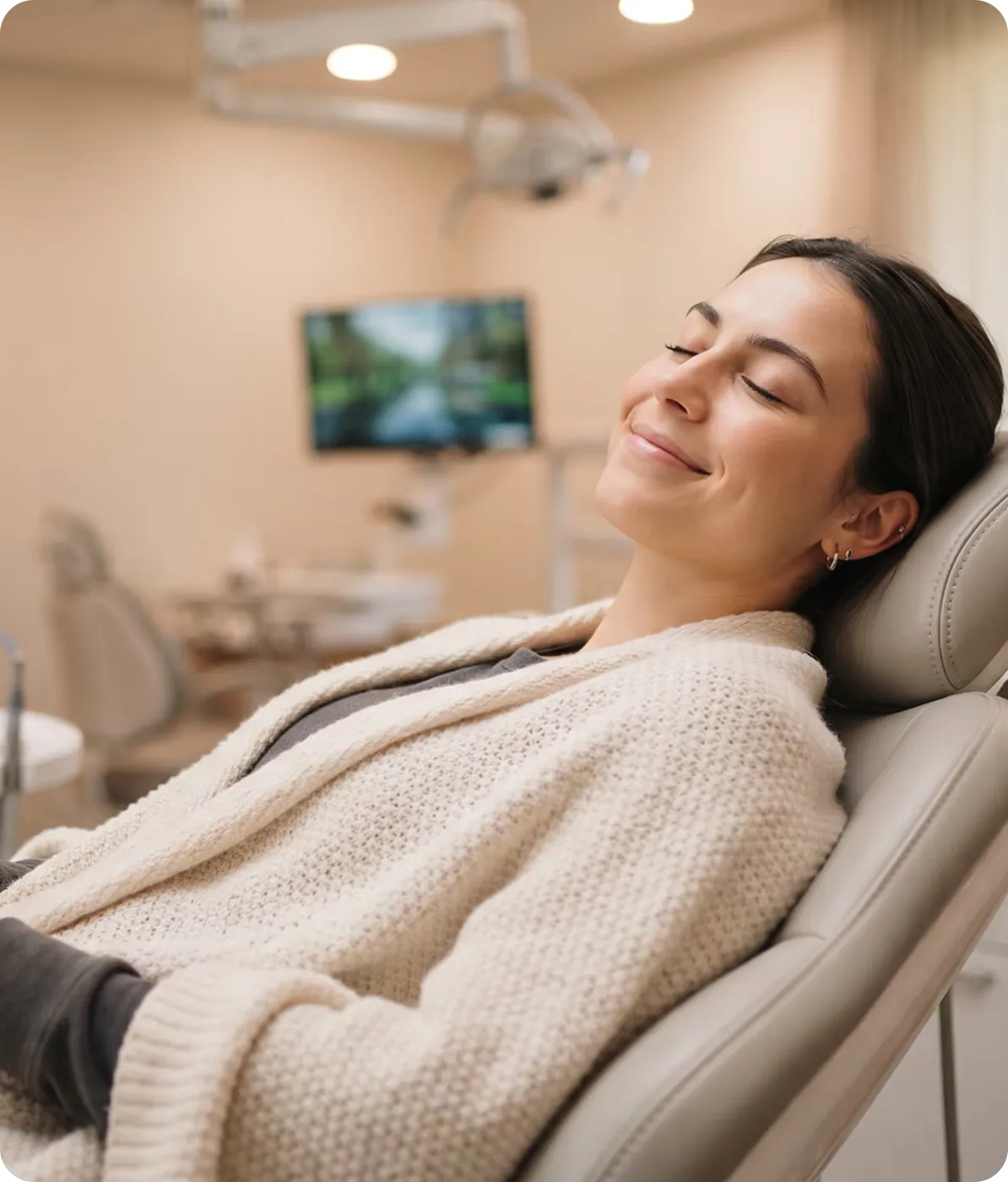
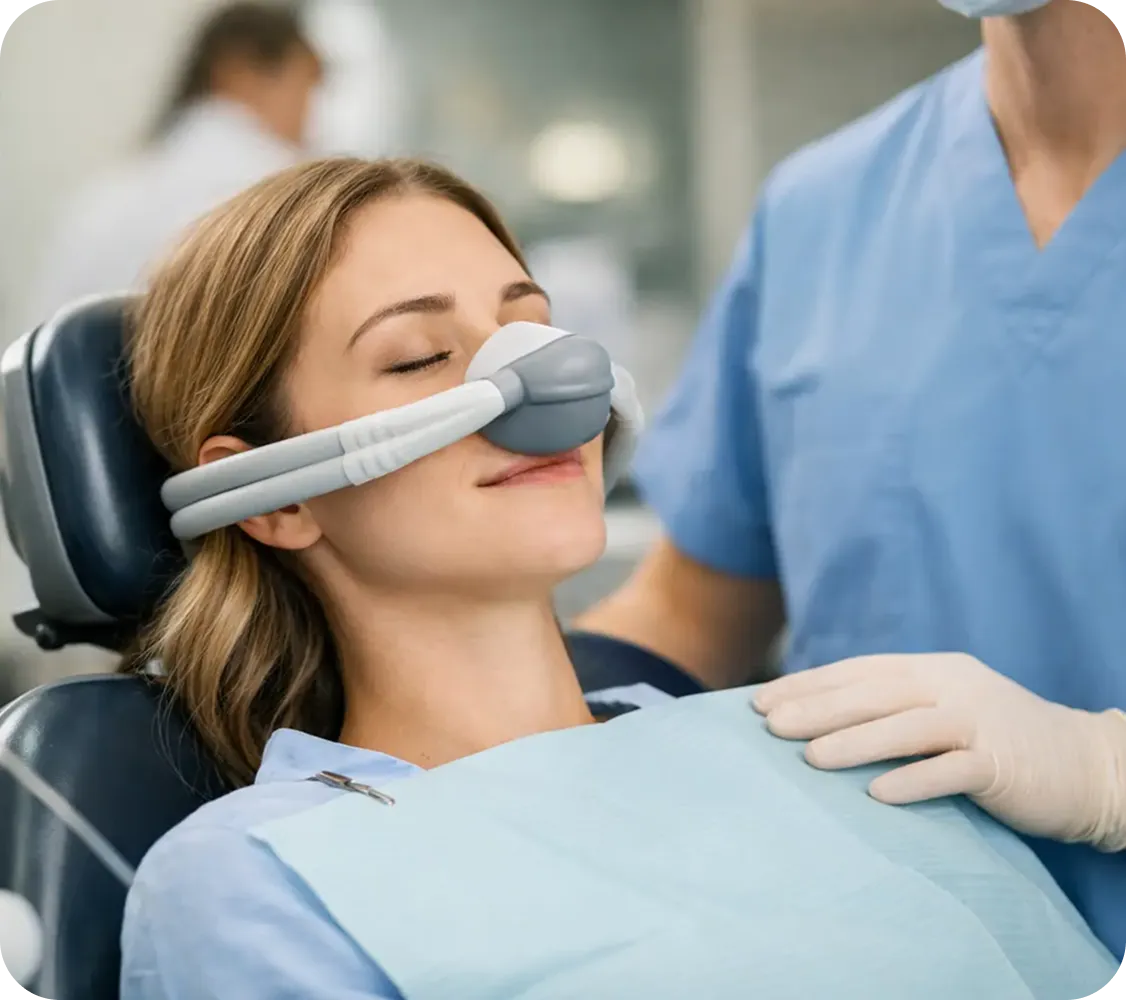
Sedation dentistry uses medication to reduce anxiety and awareness during treatment. You may feel deeply relaxed and remember little or nothing afterward while remaining responsive and breathing independently. It differs from general anesthesia and requires health screening, monitoring, and recovery planning.

Sedation may be discussed with any adult whose anxiety makes dental care difficult. It may also help after a difficult past experience, with sensitivity to dental sounds or sensations, a strong gag reflex, a long appointment, or several procedures in one visit. It can support care from a cleaning to complex restorative or surgical treatment.
Candidacy depends on your health, medications, breathing or sleep conditions, pregnancy status, substance use, and the planned procedure. Sedation is not an automatic recommendation for every patient.

Sedation is intended to keep you responsive rather than fully unconscious. You can usually answer verbal direction or light touch and continue breathing independently. Some medications may reduce your memory of the appointment. General anesthesia creates a deeper loss of consciousness and requires different airway support and monitoring.
Sedation is not risk-free. The Dental Wellness Arts team reviews your health, monitors you during care, and provides procedure-specific recovery instructions.

Share your concerns, past experiences, health history, medications, and what would help the visit feel manageable.
The Dental Wellness Arts team considers your anxiety, health, procedure, appointment length, and recovery needs before recommending sedation.
Follow eating, drinking, medication, escort, and aftercare instructions, then allow the recommended time before driving or making important decisions.
Success means you receive needed dental care while feeling calmer, less focused on the procedure, and supported throughout the visit. Some patients remember little or nothing; others remember parts of the appointment. The goal is a safe, manageable experience, not a promise of sleep or complete amnesia.
Dr. Boyajian has been providing safe sedation services for over 18 years. He has also served for more than five years as an evaluator of dentists for Dental Board of California sedation certification. The Dental Wellness Arts team pairs that experience with careful screening, monitoring, and individualized planning.


Usually not. You may feel very drowsy, but sedation dentistry is intended to keep you responsive. General anesthesia is a different level of care.
Some sedative medications can cause partial or substantial amnesia. Memory varies, so no one should promise that you will remember nothing.
Yes. An appropriate adult may discuss sedation for any treatment that causes significant anxiety, from a cleaning to complex dental surgery.
No. Sedation reduces anxiety and awareness, while local anesthetic numbs the treatment area. When both are needed, the local anesthetic is usually administered after the patient has been sedated.
Essentially, yes. Sedation dentistry is generally safe for an appropriate patient when carefully planned and monitored, but no method is risk-free. Safety depends on screening, the medication and dose, the planned depth, the dental team's training, monitoring, and following preparation and recovery instructions.
Yes. You will need a responsible adult to drive you home. Do not drive or operate a motor vehicle for the rest of that day and, depending on the medication and your recovery, possibly until the following day. Drive again only when you are fully alert and the Dental Wellness Arts team's instructions allow it.
Tell the Dental Wellness Arts team what makes dental care difficult and what treatment you are considering. The team will review your health, explain whether sedation may be appropriate, and help you plan a manageable visit.

Advanced Regenerative Dentistry
Westchester's trusted holistic dental practice. Caring for smiles and whole-body health since 2005.


Monday
7am – 3:30pm
Tuesday
7am – 3:30pm
Wednesday
7am – 3:30pm
Thursday
7am – 3:30pm
Friday – Sun
Closed
©2026 All Rights Reserved. Design & Development by Jamie Danae | Sitemap | Privacy Policy | The information available on this website is provided for informational purposes only. This information is not intended to replace a medical consultation where a physician’s judgment may advise you about specific disorders, conditions, and/or treatment options. We hope the information will be useful for you to become more educated about your health care decisions. If you are vision-impaired or have some other impairment covered by the Americans with Disabilities Act or a similar law, and you wish to discuss potential accommodations related to using this website, please contact us at 310-670-6944.